
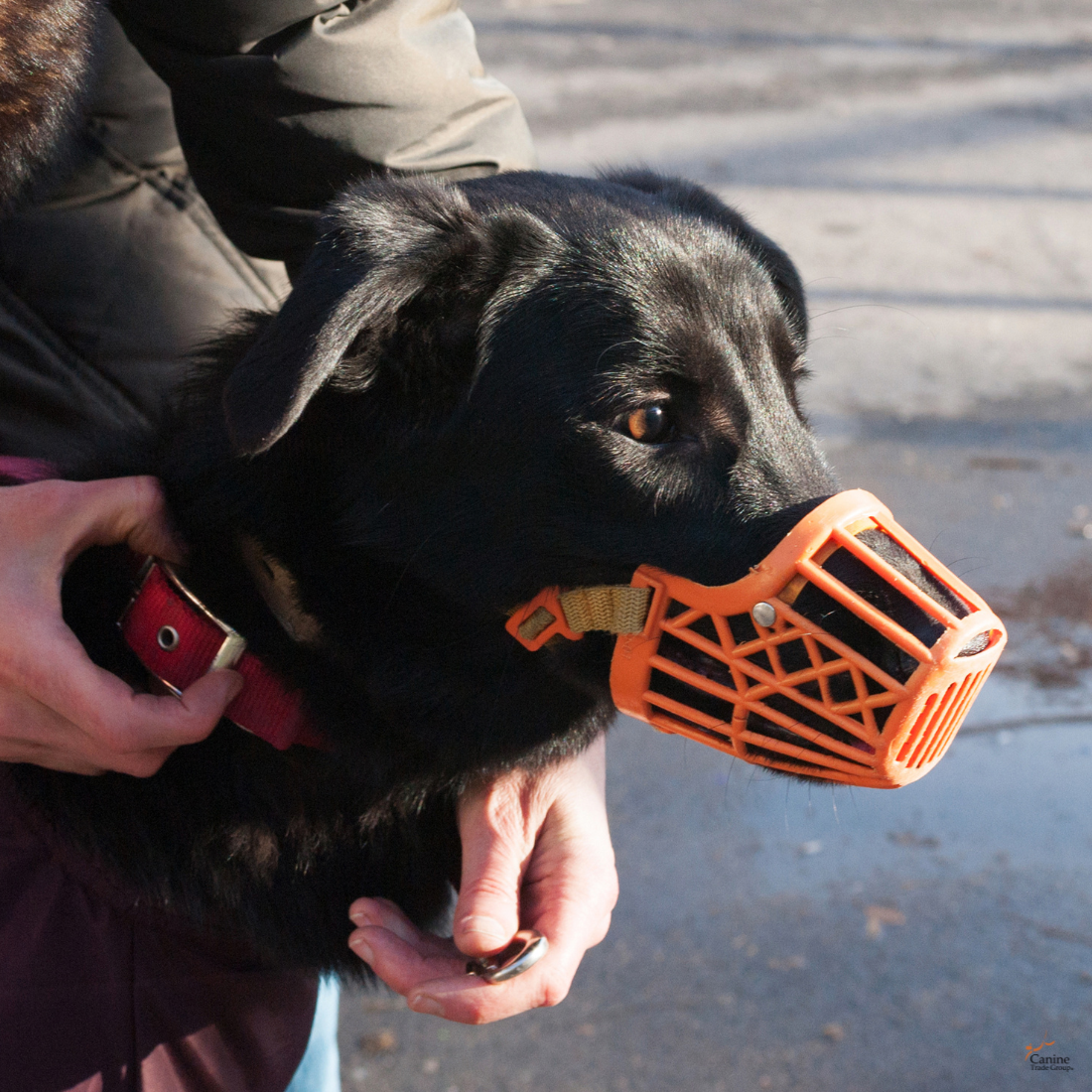
Many people, when they think of a dog being muzzled, they think of an aggressive, uncontrollable dog that can’t do anything (ie: go to the vet for an exam, go for a walk in the neighborhood, get a haircut at the groomer’s salon) without being restrained and muzzled. While many dogs that wear muzzles might have some aggression issues, it doesn’t mean the dog isn’t a rabid animal that shouldn’t be part of society. Perhaps some of the dogs wear muzzles for very specific situations, and outside of that, are completely fine and friendly.
Regardless on whether a muzzled dog has aggression issues or not, muzzle training is something every dog owner should do with their dog. Yes, even YOU with the sweet Golden Retriever who poses with children in holiday photos and has never so much as snarled at a person or dog! Maybe your chances of needing to muzzle your dog are slim, but there is always a possibility that a muzzle might be useful for you and your dog. As an Atlanta dog trainer who does aggressive dog training, here are some examples on why muzzle training can be helpful:
- Muzzles are often utilized at veterinarian offices for safety reasons. Many dogs that come to the vet are uncomfortable in this new and sometimes busy environment, and of course, having strangers poke and prod you may not be your dog’s favorite activity. When a dog is uncomfortable and they wish to express their displeasure, many will give a warning sign such as growling, baring teeth, or snapping (not trying to make contact). Some dogs may automatically go to bite, and could escalate to that if their warning signs go unheeded. Veterinarians and vet techs need to be able to do their job to maintain their patient’s healthcare, and while they can do everything from offering treats to having the dog’s owner soothe the dog, for their safety, a muzzle may be needed for a routine exam.
- There is a possibility that a dog who isn’t uncomfortable at the vet and in fact, might LOVE to go to the vet (it happens – offering treats at the reception or exam room certainly helps!), might still be moved to snap or bite. The reason is because if your dog is in any pain and you go to touch or move them, their first instinct is to bite because they are making sure you do not potentially cause more pain, regardless of your intentions. Let’s say your best friend was playing too hard in your yard and tore his ACL, and you need to take him to the emergency vet right away. Going to move your dog might be tricky because you want to make sure you don’t cause more pain as you’re trying to transport your dog, but your dog may not know what you’re doing or how careful you’re trying to be when moving them. If you were to muzzle your dog before moving them onto a homemade stretcher or right in your car, your dog will not be able to interfere with a bite as you’re trying to help. This will expedite the process of you getting your dog to the hospital and not having you go to your human emergency room after dropping your dog off! So yes, even if your dog loves the vet, but perhaps they may need to do a procedure that might cause extreme discomfort or pain, a muzzle will make sure the vets can do their job and your dog’s recovery can begin sooner!
- If a dog does have aggression or reactivity issues, having them wear a muzzle is to protect everyone, including your dog. But even an aggressive muzzled dog deserves a chance to live a normal life, especially if they’re doing training to overcome these issues! When I train reactive or aggressive dogs here in Atlanta, muzzling always comes up with the owners to see if they are willing to use these tools to help their dog’s training progress. If I am working with a dog that is aggressive to human beings that walk past them on walks, I have the dog muzzled to ensure if someone were to walk by, they would not get hurt and the dog would not be in big trouble. The muzzle is also a tool for the owners in many ways – while many people might feel embarrassed about muzzling their dog because of how people might perceive their dog, I tell them it is better to be safe, and it is better to work on these issues rather than lock your dog up from the real world forever. We make sure the owners have the right handling skills and the dog has made some behavioral progress before putting them in a triggering environment. Once owners get over other people’s opinions, they realize that they can train their dog more with less anxiety. Trying to work on a dog’s human aggression can be terrifying, especially if the dog isn’t muzzled and you don’t know what could happen. Even if we’re training and something out of the ordinary happens that might trigger the dog, if they’re muzzled, we know they can’t bite and harm anyone. Decreasing owner anxiety also allows the dog to better focus and progress, as they can often sense when their owners are anxious and tense, therefore feeding into their own anxiety and territorial aggression.
So if you’re thinking of muzzle training your dog, but are not sure how to, let’s talk! First off, you have to select the right muzzle for your dog. As a dog trainer here in Atlanta, I’ve seen all kinds of muzzles on all kinds of dogs, and while they may look a bit much, my go-to muzzles are the basket muzzles. They may seem cumbersome but it provides excellent security and there’s less pressure on the snout, which allows dogs to pant better, and also drink water and take food through them. Make sure you get the right size muzzle – you may need to measure your dog’s snout and head to figure out the correct size.
If you have a basket muzzle, show it to your dog and let them sniff it. Don’t try to put it on – let them investigate it on their own. If everything seems good, then take your dog’s favorite treat and put it in front of the muzzle and then show the back of the muzzle to your dog. Your dog should be able to smell the treat where they will ideally stick their nose in the muzzle to follow the scent. You can then mark the behavior and treat the dog through the muzzle after they’ve voluntarily put their nose in. Do this several times, and then repeat it again later that day, and/or the next day.
You want to do this for a few days until your dog is excitedly putting their nose in the muzzle without hesitation. When they get to this point, it is time to try to put it on your dog and secure it. When you’re ready for this, leash your dog and get the muzzle. Smear a little bit of peanut butter (without xylitol) or plain yogurt in the inside of the muzzle (yeah it’ll be a little messy) and your dog should stick his nose and clean that up. This should keep your dog a little busy while you then secure the muzzle on. Once it is on and your dog is done with the peanut butter or yogurt, praise and offer their usual treats through the muzzle. If they try to paw it off or dive to the floor to pry it off their face, calmly tell them no and hold them on the leash so they can’t act out more. Try to also tell them to Sit and then treat and praise when they do the command and stop pawing or acting out. Have them wear the muzzle for a minute or two, and then take it off. Then do the same thing the next day and see if you can increase the time of them wearing it.
We want to make wearing the muzzle a positive thing, hence the muzzle conditioning in the first place. Try to get plenty of muzzle training in before it is time to really have them wear it for a possible stressful vet visit or a training session where they are going to be tested with their aggression triggers. Dogs will need time to adjust to the muzzle so make sure you practice and work on positive reinforcement when having them wear it. Do what you want to prevent any pawing of the muzzle.
Whenever I see a muzzled dog, I don’t think “aggressive dog”, I think “responsible and caring owner” that wants to still let their dog enjoy walks and maybe even are actively working on their dog’s behavior through some type of training. Muzzles are safety tools for EVERYONE, and every dog owner should be ready to use a muzzle for their dog because you never know what will happen!
If you need help muzzle training and/or have an aggressive dog that needs muzzle and behavior training, reach out to us at 678-358-0658!